How to Read Your Optical Prescription: Understanding SPH, CYL, AXIS & ADD
Confused by the numbers and plus/minus signs on your optical card? Here is a simple, clear guide to decoding your clinical eyeglass prescription.
Dr. David Muchai
Verified ExpertLead Clinical Optometrist • St. Mary Optical Team

- OD stands for Oculus Dexter (Right Eye) and OS stands for Oculus Sinister (Left Eye).
- A minus (-) Sphere indicates nearsightedness (myopia), while a plus (+) Sphere indicates farsightedness (hyperopia).
- Pupillary Distance (PD) ensures that the optical center of your lenses lines up precisely in front of your pupils.
Decoding the Latin Abbreviations
OD (Oculus Dexter): Your right eye.
OS (Oculus Sinister): Your left eye.
OU (Oculus Uterque): Both eyes.
SPH (Sphere): The primary lens power required to bring light into focus, measured in diopters (D).
What Do CYL, AXIS and ADD Mean?
CYL (Cylinder): The amount of lens power needed to correct astigmatism. If this box is blank or 0.00, you have no astigmatism.
AXIS: A number between 1 and 180 degrees describing the angle of the cylinder correction on your cornea.
ADD (Addition): The extra magnifying power added to the bottom section of progressive or bifocal lenses for close-up reading.
PD is the millimeter distance between your pupil centers. If lenses are cut with the wrong PD, you may experience prism distortion, dizziness and eye strain even if the prescription power is 100% correct.
How Long is an Eye Prescription Valid?
Adult optical prescriptions are typically valid for 12 to 24 months. For growing children, yearly reviews are strongly recommended because refractive power changes dynamically with growth.
Have questions about your prescription or eyewear needs?
Schedule a comprehensive eye exam or custom frame styling consultation with our clinical specialists at Sama House, Githurai 45.
Continue Reading
Related Vision Insights

The Modern Guide to Blue Light & Digital Eye Strain: What Actually Works?
With screen time at an all time high, discover how selective blue light filtering, the 20-20-20 rule and anti-reflective lens coatings protect your visual comfort.
Read Article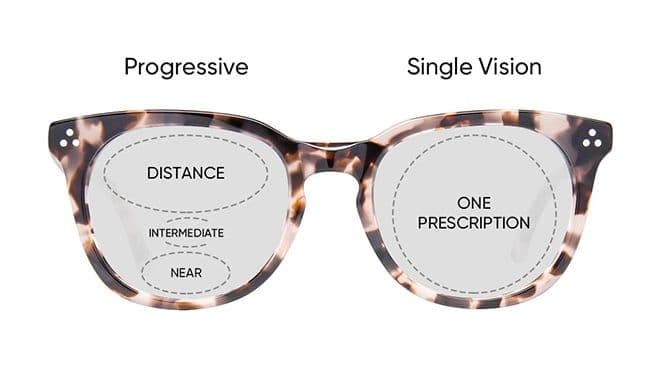
Single Vision vs. Progressive Lenses: How Modern Freeform Technology Works
Tired of switching between reading glasses and distance spectacles? Learn how modern digital progressive lenses provide seamless vision across all distances.
Read Article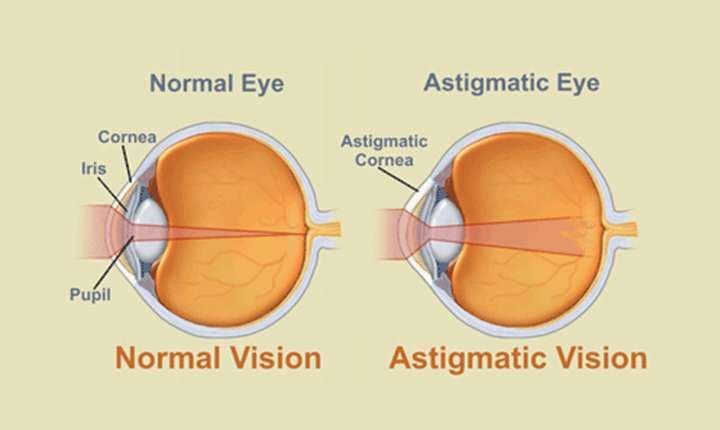
Demystifying Astigmatism: Why It Blurs Vision & How Toric Lenses Fix It
Astigmatism is not an eye disease—it is an irregular corneal curvature. Learn how cylindrical lenses and toric contact lenses restore razor-sharp focus.
Read Article